Rain World Saint Map Guide: Echo Route, Karma 10 & Rubicon Path
A spoiler-light route guide for using the map as Saint: how to plan echoes, protect karma, read cold-region transitions, and approach Rubicon without turning the whole campaign into a room-by-room checklist.

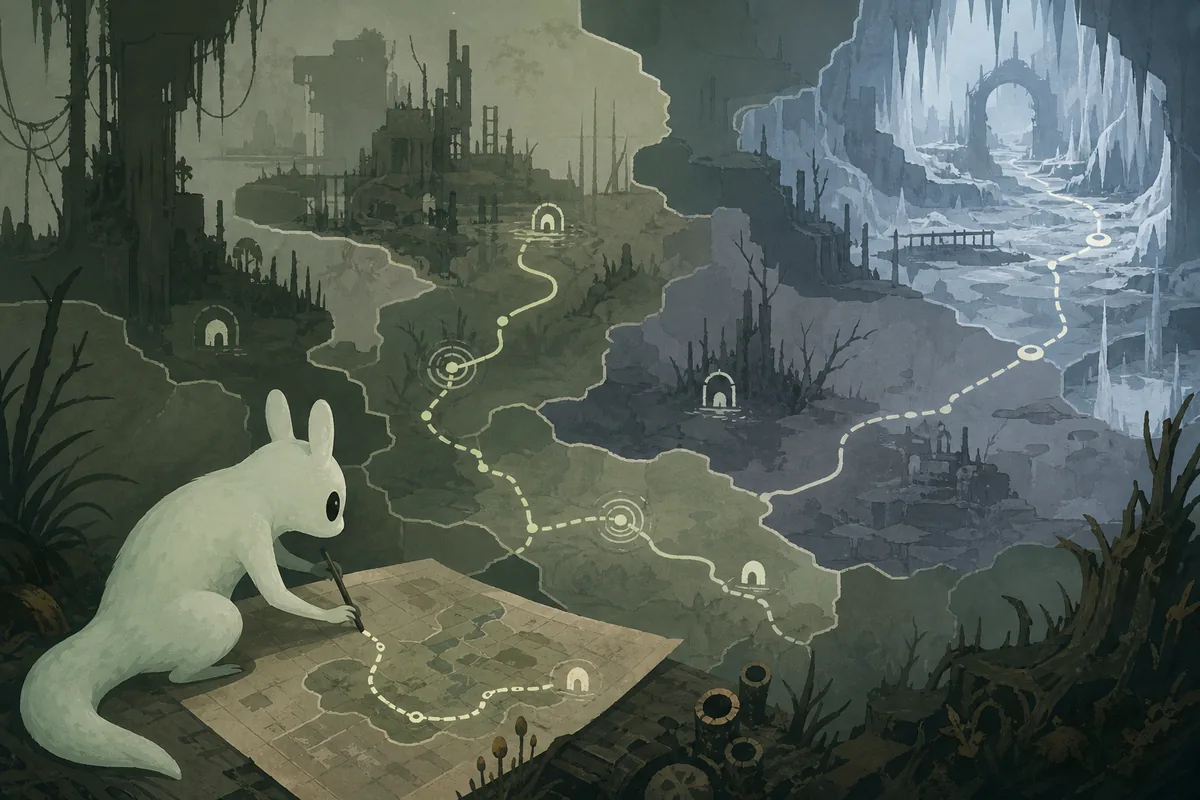
Table of Contents
Saint changes how you should read a Rain World map. The campaign is not just a normal region order with a different movement set; it asks you to manage cold routes, fragile karma planning, echo visits, and late-game transitions where a single greedy cycle can undo a careful setup. A map is useful, but only when it answers the immediate planning question: where can I sleep, which echo or gate matters next, what route keeps karma safe, and how much of Rubicon do I really need to reveal before playing?
Quick Answer: Best Saint Map Workflow
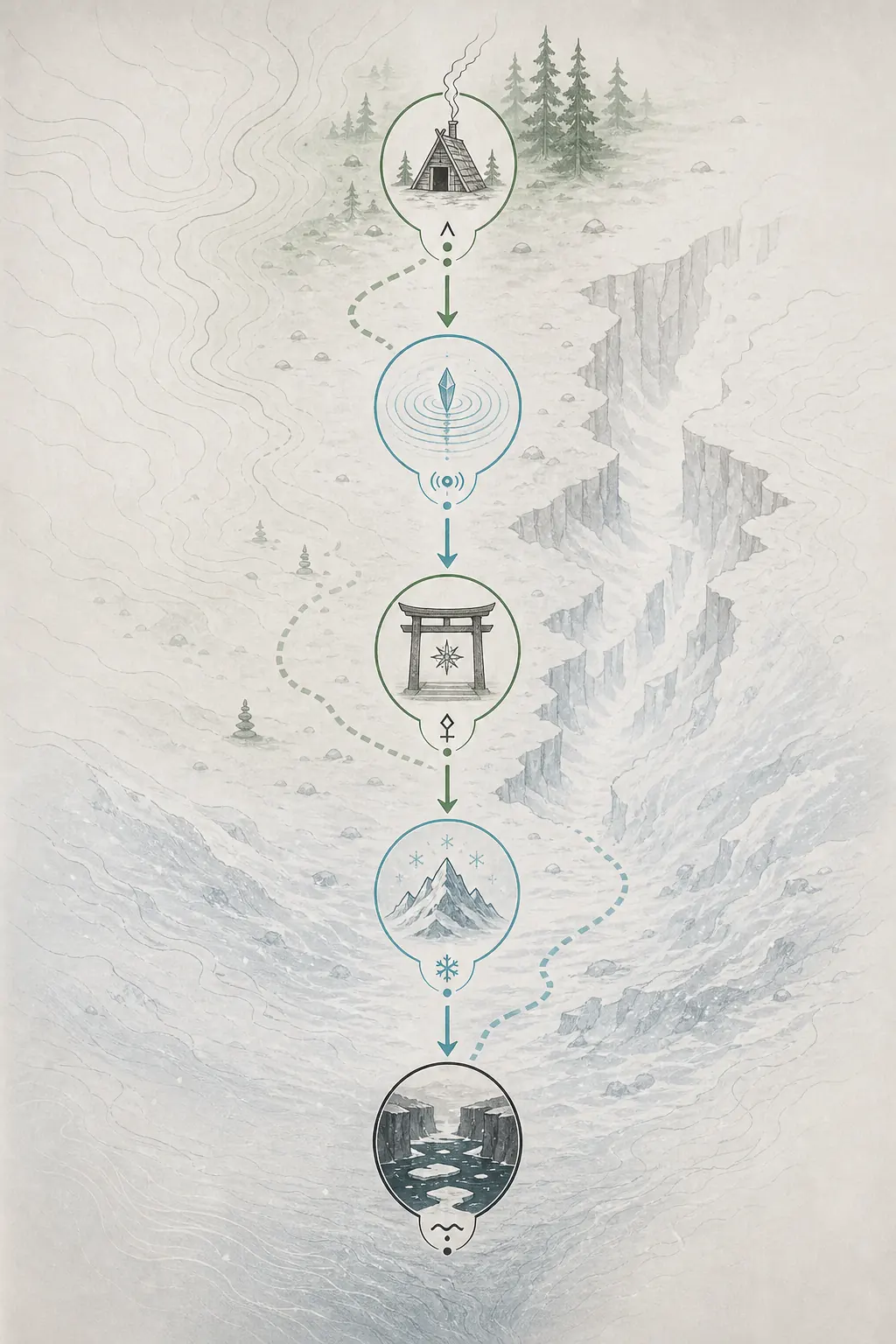
Use the Saint map in five passes. First, mark your current shelter and the nearest safe food or recovery loop. Second, check whether the next move is an echo visit, a karma 10 gate, or a simple region transition. Third, compare the shelter after the transition, not only the gate itself. Fourth, reveal the next cold-region or Rubicon branch only as far as the next practical sleep point. Fifth, stop planning and play the cycle before the map turns into a spoiler wall.
Spoiler-light Saint route workflow
Current shelter -> echo or gate check -> first safe shelter after transition -> cold-region risk check -> Rubicon branch -> fallback shelter
The important distinction is intent. A general Downpour map can show every region, but a Saint route guide should help you choose a stable next action. If a path reaches the right region but leaves you without karma, warmth, or a realistic shelter chain, it is a scouting route, not the main route.
How to Read the Map as Saint
Saint rewards patient route reading. Before you zoom into individual rooms, decide whether the current cycle is for progression, echo setup, recovery, or scouting. Those four goals use the same map differently. A progression cycle needs the first shelter after a transition. An echo cycle needs a safe approach and a clean return. A recovery cycle needs food and low-risk rooms. A scouting cycle only needs information you can bank for later.
Do not start by asking for the full shortest route to the end. Start by checking shelter spacing, gate requirements, vertical movement demands, and whether the next region punishes slow travel. Saint can access unusual routes, but the campaign still punishes over-reading and overextending. The best map use keeps the next two decisions clear while leaving the larger discovery intact.
Shelter before destination
Pick the next sleep point before committing to an echo, karma gate, or Rubicon branch.
Karma is the route resource
Treat karma 10 as something to protect, not a number you can casually rebuild after every mistake.
Cold routes need margins
If a region slows movement or recovery, plan shorter shelter hops instead of one long push.
Reveal only the next branch
For a first Saint run, inspect the route to the next shelter or gate rather than the full campaign map.
Echo Route, Karma 10, and Safe Cycle Planning
Saint's route planning often revolves around echoes and karma stability. The map should help you separate echo access from story progression. A good echo cycle begins at a known shelter, reaches the echo with enough time to recover, and either returns to safety or lands near the next useful transition. A bad echo cycle is one where the marker looks close on the full map but the shelter chain is fragile.
If you are unsure whether to visit an echo now, check three details before moving: the shelter before the approach, the first shelter after the echo or gate, and the fallback route if the cycle goes wrong. When any of those are unclear, use the interactive map to scout the missing link first instead of forcing the whole route.
| Phase | Map check | Reason | Warning |
|---|---|---|---|
| Echo setup | Find the approach shelter, nearby food, and the shortest recovery path. | The echo visit is safer when treated as the cycle objective. | Do not add a new region transition after a late echo unless the next shelter is obvious. |
| Karma 10 gate | Confirm the gate, the room after it, and a reachable shelter beyond the transition. | Passing the gate is only useful if the next region can be stabilized. | A gate route with no post-gate shelter plan wastes a strong karma state. |
| Cold-region push | Shorten the route into shelter-sized segments and check vertical movement demands. | Saint loses more to slow, vague travel than to a single difficult room. | Long straight-line paths on the map can feel much longer in play. |
| Rubicon approach | Reveal one branch to the next safe point, then stop reading until you play it. | Rubicon navigation is better learned in controlled pieces. | Full-route spoilers can make the campaign harder to parse, not easier. |
Saint Route Planning Table
This table is the practical brief to keep beside the map. It avoids pretending there is one perfect route for every save file and instead tells you what to verify before each kind of Saint decision.
| Stage | Goal | Map check | Risk |
|---|---|---|---|
| 1 | Stabilize the current shelter | Mark food, safe loops, and exits you can return from before rain. | Skipping this step makes every later route look shorter than it really is. |
| 2 | Choose echo, gate, or scouting | Decide whether this cycle advances karma, opens a transition, or simply learns a branch. | Trying to do all three usually creates a weak unsaved route. |
| 3 | Plan the first shelter after a transition | Check the first reliable sleep point after the gate or region change. | A successful gate pass can still fail if the next region cannot be stabilized. |
| 4 | Manage cold or late-game travel | Split the route into short segments and identify recovery rooms. | Saint routes punish vague long pushes more than most slugcats. |
| 5 | Approach Rubicon deliberately | Reveal one branch, one fallback, and one shelter-equivalent objective at a time. | Reading the whole end route before playing can hide the immediate survival problem. |
For exact rooms, shelters, gates, and region connections, open the interactive Rain World map
Rubicon Map Checks Without Over-Spoiling the Route
Rubicon is the point where many players either overuse the map or avoid it entirely. A better middle path is to use the map for local safety: the next branch, the next recovery point, and the fallback if the room sequence is harder than expected. Do not start with a full endpoint-to-endpoint solution unless you are replaying or speedrouting.
When the embedded map loads, choose the relevant Saint or Downpour view if available, then inspect only the route slice you are about to play. This embedded map counts as a live visual planning point; the guide's generated illustrations are editorial aids, while the map itself is the tool for exact room and shelter checks.
Common Saint Map Mistakes
- Planning the ending before the next shelter: The next safe sleep point matters more than a clean-looking final route.
- Treating echoes as quick detours: Echo visits deserve their own shelter plan, especially when karma or cold routes are already tight.
- Using Downpour overview logic only: The Downpour guide is useful context, but Saint needs a more careful karma and Rubicon workflow.
- Reading every room at once: Full-map reading can remove discovery while still leaving the practical route unclear.
- Ignoring fallback paths: Always mark a retreat or recovery loop before entering a region branch you have not practiced.
Final Advice for Saint Map Routing
The best Rain World Saint map workflow is deliberate and narrow. Use the map to protect karma, choose echo cycles, inspect the first shelter after a transition, and approach Rubicon one branch at a time. That gives you the value of a map without reducing the campaign to a checklist.
If you only remember one rule, make it this: plan from shelter to shelter, not from spoiler to spoiler. Saint's campaign is much easier to read when every route decision has a recoverable next step.
FAQ: Rain World Saint Map
References and Further Reading
- Official Rain World: Downpour page for Saint campaign context - Rain World: Downpour on Steam
- Community context for Saint abilities and campaign terminology - Saint wiki reference
- Compare Saint against the broader DLC route set - Rain World Downpour map guide
- Review general region-order fundamentals before specialized Saint routing - Rain World progression guide
Last updated: June 28, 2026