Rain World Hunter Map Guide: Route, Cycles & Neuron Delivery
A practical Hunter route guide for reading the Rain World map under cycle pressure: plan shelters, karma gates, neuron delivery, and fallback paths without turning the campaign into a full spoiler checklist.

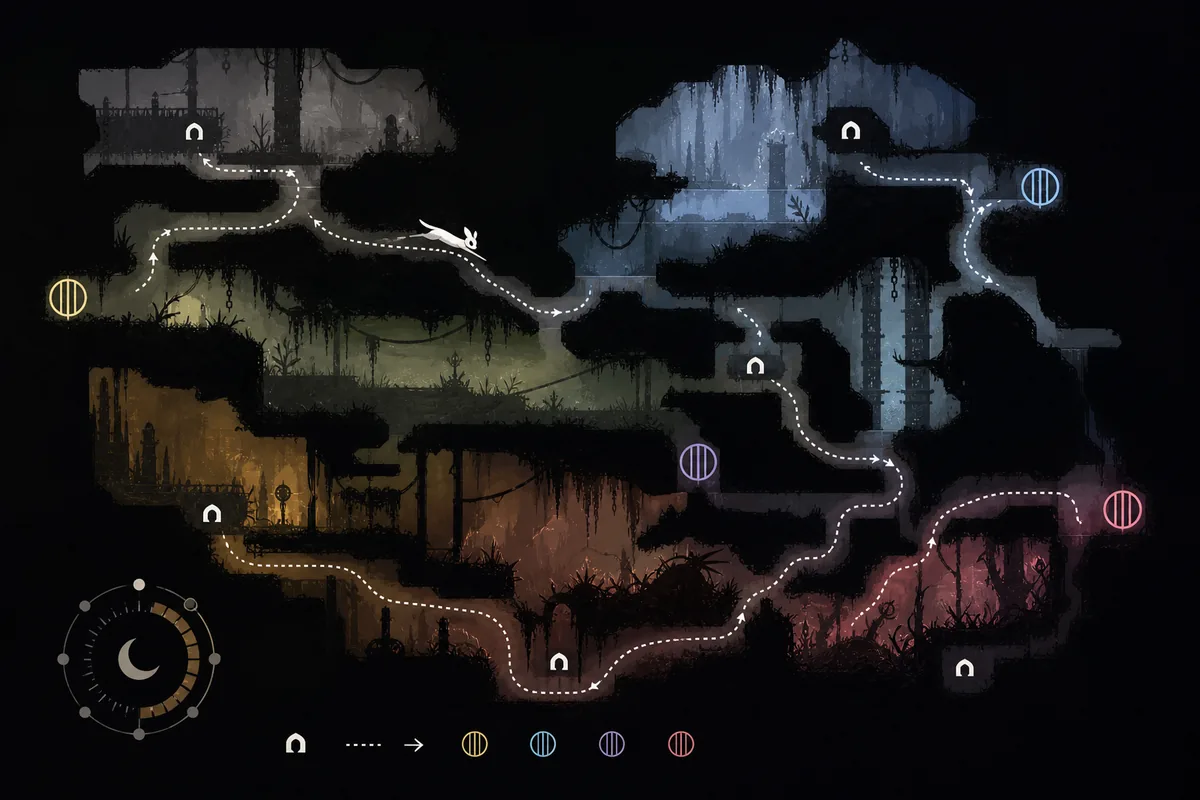
Table of Contents
A Rain World Hunter map guide has to answer a different question from a normal Survivor route. Hunter starts with stronger combat tools, but the campaign adds cycle pressure, karma planning, and a delivery objective that makes every bad detour expensive. The useful map is not the one that reveals every room at once. It is the one that lets you decide which shelter to reach next, whether a gate is worth the cost, when to carry the neuron, and where to recover if the route goes wrong.
Quick Answer: How to Use the Hunter Map
Use the Hunter map in short, cycle-sized passes. First identify your current shelter and the nearest safe food route. Then check the next karma gate or transition, mark one fallback shelter, and decide whether the cycle is for progress, scouting, or delivery. Do not plan three regions ahead unless the next shelter chain is already stable.
Spoiler-light Hunter routing routine
Current shelter -> food check -> next gate or transition -> delivery objective -> fallback shelter -> sleep before overextending
For a first Hunter clear, the map should keep you moving without hiding the campaign's pressure. If you are carrying the neuron, reduce optional detours. If you are scouting, avoid spending karma on a gate that you cannot support with a shelter on the other side.
Hunter Route Planning Table
Hunter routes vary by player confidence, but the map questions are consistent. Use this table before each major push so the route is built around saved progress rather than hope.
| Stage | Goal | Map check | Risk |
|---|---|---|---|
| 1 | Stabilize the current shelter | Confirm food, nearest shelter, and the safest way back before moving into a new branch. | Hunter can fight well, but a strong room does not matter if the cycle ends too far from sleep. |
| 2 | Choose the next gate or region | Check karma requirement, first shelter after the transition, and whether the route supports a return. | A gate that looks short on the map can become a trap if food and shelter are separated. |
| 3 | Protect the neuron delivery | Trace the delivery segment as a clean shelter-to-shelter route with few optional rooms. | Combining delivery with exploration usually wastes cycles and increases death risk. |
| 4 | Decide when to ascend or detour | Separate objective progress, echo or karma recovery, and final descent planning into different cycles. | Trying to solve every objective in one route makes the map harder to use. |
| 5 | Bank new information | After confirming a new shelter or route branch, decide whether sleeping is better than pushing farther. | The safest Hunter run often wins by storing route knowledge one cycle at a time. |
For exact rooms, gates, shelters, and region exits, open the interactive Rain World map
Cycle Limit, Karma, and Shelter Checks
Hunter's campaign makes time feel strategic. The map should be read as a sequence of safe sleeps, not as a single line across the world. Before using a gate, ask whether the first shelter after it is reachable with the current food route and rain timing.
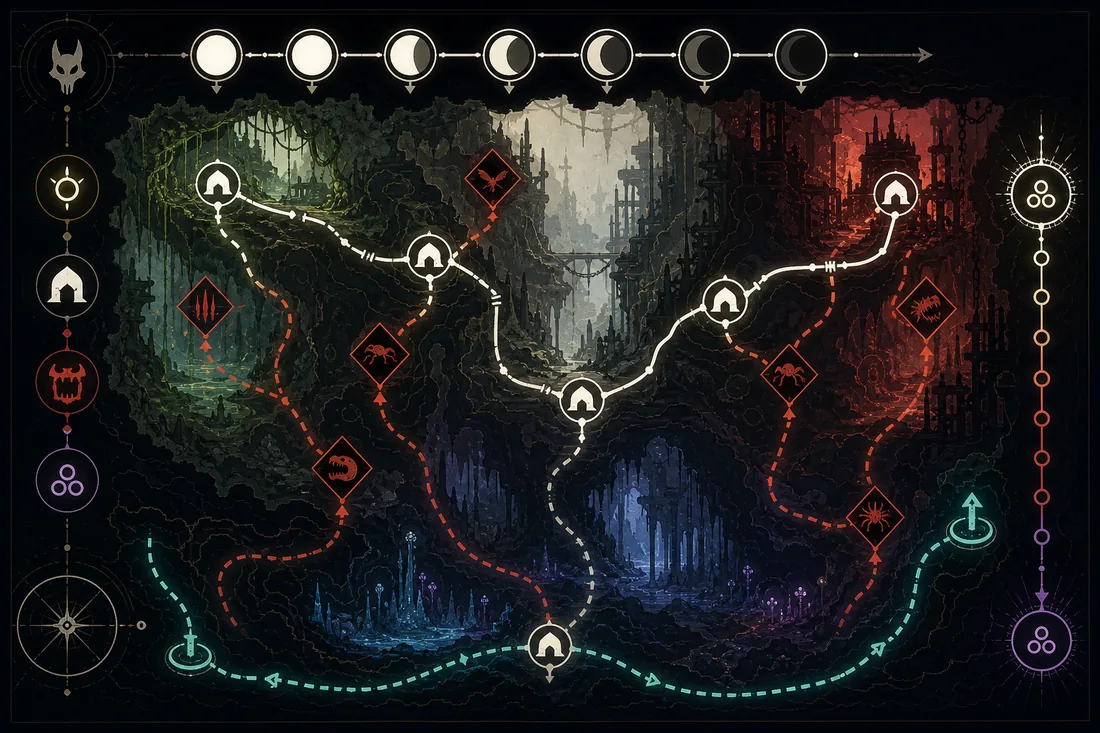
Use the map to classify the cycle before leaving shelter. A progress cycle reaches a new shelter or gate. A delivery cycle protects the neuron. A recovery cycle repairs karma, food, or route position. Mixing all three is the common reason Hunter runs collapse.
Progress cycle
Use when the next shelter, gate, or transition is already visible on the map and the food plan is realistic.
Delivery cycle
Use when carrying the neuron. Keep the route narrow and avoid optional rooms that do not improve the objective.
Recovery cycle
Use after a death, low karma, or bad position. The goal is stability, not a new region.
Scout cycle
Use when the map shows several branches but you do not yet know which one is survivable.
Neuron Delivery and Objective Route Planning
The neuron delivery objective turns Hunter map reading into a logistics problem. The route should minimize uncertain rooms, protect shelter access, and avoid optional branches that only make sense when you are not carrying a critical item.
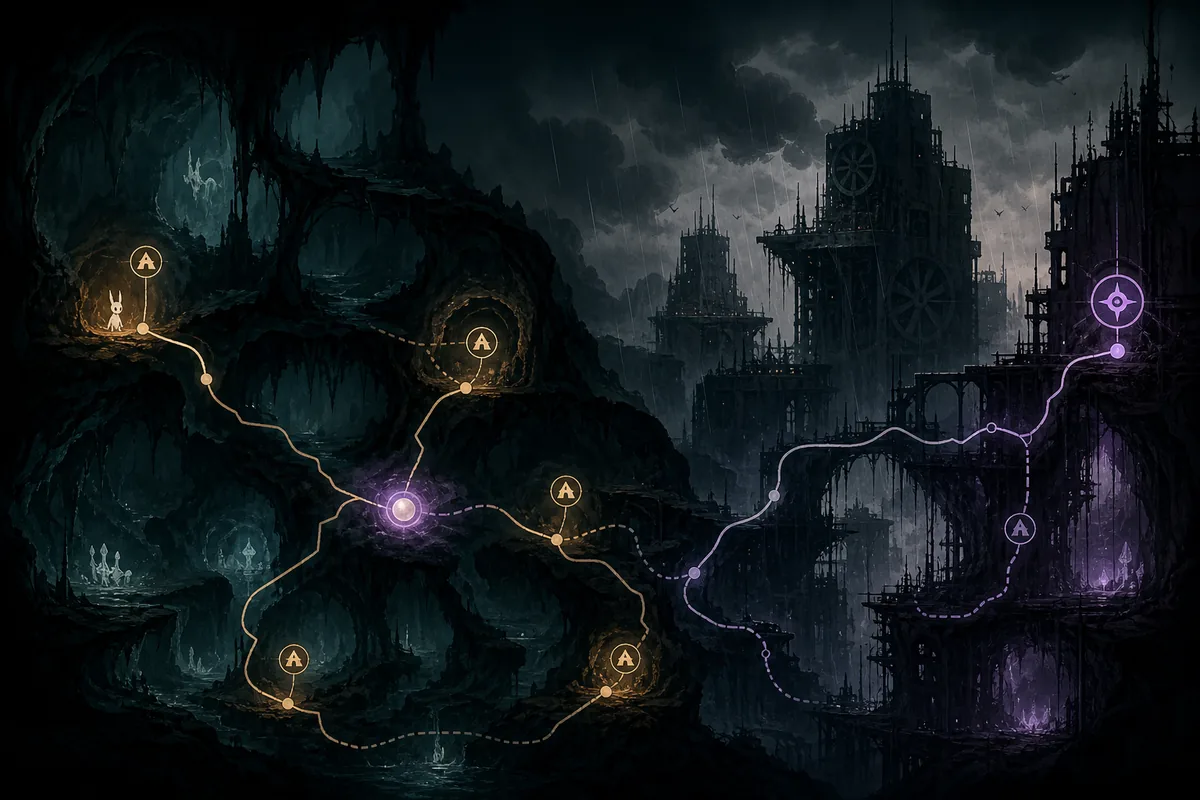
If you do not want heavy spoilers, plan only the current delivery segment. Confirm the next shelter, the next transition, and the recovery plan if the item is dropped or the cycle runs late. Save full-route study for replays or challenge routing.
- Start from the last safe shelter: Do not plan from memory alone. Match the shelter, nearby terrain, and visible exits before choosing the next branch.
- Check one transition ahead: Look for the first stable shelter after the next gate or region connection, not just the doorway itself.
- Reduce optional collection: While carrying the neuron, skip pearls, side rooms, and exploration loops unless they directly support survival.
- Keep a fallback room: Name the route you will retreat through if rain timing, enemies, or karma status breaks the plan.
Best Map Layers for Hunter
Hunter benefits from fewer layers, not more. Turn on the information that answers the current cycle and leave late-game spoilers hidden until they matter.
- Shelters: Keep shelters visible at all times. They are the real checkpoints for a timed route.
- Karma gates: Check requirements before committing to a region change, especially after a death or recovery cycle.
- Region exits: Use exits to compare two route branches without reading every room in the destination region.
- Echoes and late objectives: Enable these only when the cycle is explicitly about karma recovery, ascension planning, or replay routing.
- Creature-heavy routes: Treat dangerous rooms as route cost. Hunter can fight, but combat still consumes time, food, and attention.
Common Hunter Map Mistakes
- Planning by distance only: The shortest line on the map is not always the safest Hunter route. Shelter spacing and food matter more.
- Combining delivery and scouting: Scout uncertain branches before carrying the neuron through them whenever possible.
- Ignoring karma after a death: A route can remain physically reachable while the gate requirement is no longer realistic.
- Reading too many future regions: Full-map research can solve navigation but remove the useful tension from a first Hunter run.
- Pushing past the first new shelter: When you find a new safe sleep point, banking progress is often stronger than squeezing in one more risky room.
Final Advice for Hunter Routing
The best Rain World Hunter map workflow is disciplined and narrow. Use the map to choose the next shelter, solve the next gate, protect the delivery route, and keep one fallback path. That is enough information to make the next cycle playable without spoiling the whole campaign.
If the plan feels unclear, downgrade the cycle. Scout instead of deliver, recover instead of push, or sleep after confirming a new route branch. Hunter is difficult, but the map becomes much more useful when every cycle has one job.
FAQ: Rain World Hunter Map
References and Further Reading
- Official Rain World page for base game context - Rain World on Steam
- Community reference for Hunter campaign mechanics and terminology - Hunter wiki reference
- Use general region order before committing to a Hunter route - Rain World progression guide
- Compare Hunter with other slugcat route planning - Survivor map guide
Last updated: July 1, 2026